More couples in Singapore are stepping away from the expected and choosing a sapphire to mark their engagement — and few stones carry the pedigree of a Ceylon sapphire. Mined in Sri Lanka's famed gem fields, these stones have crowned royal rings for centuries and are prized for a luminous, velvety blue that no laboratory can convincingly imitate.
But buying a sapphire is not like buying a diamond. There is no universal grading scale, colour matters far more than carat, and two stones of identical weight can differ in value many times over. This guide distils what our gemologists tell private clients every week.
Why Ceylon Sapphires Stand Apart
Sri Lanka — historically Ceylon — has produced sapphires for over two thousand years, and its gem fields around Ratnapura remain among the only sources of fine cornflower-blue stones of significant size. Ceylon sapphires are famed for their bright, medium-toned blue with a soft, velvety saturation. Where stones from other origins can lean inky or overly dark, a fine Ceylon stone stays vivid even in low evening light — exactly the conditions of a candlelit dinner in which an engagement ring should perform.
Colour First, Carat Second
With sapphires, colour accounts for the majority of a stone's value. Look for three things: hue (a pure blue, or blue with a whisper of violet), tone (not so dark that the stone reads black indoors), and saturation (vivid, without grey or brown masking).
Only after colour should you weigh size. A vivid 1.5-carat stone will always outshine a dull 3-carat one — and because sapphires are denser than diamonds, a sapphire of the same carat weight looks slightly smaller, so judge by millimetre measurements rather than carat alone.
Cut, Clarity and Certification
Sapphires are cut for colour, not for maximum sparkle, so expect ovals and cushions rather than the strict symmetry of a round brilliant diamond. A well-cut stone returns colour evenly across the face with no washed-out 'window' at its centre.
Insist on a certificate from a recognised independent gemmological laboratory stating origin and whether the stone has been heated. Unheated Ceylon sapphires command a premium; heated stones are entirely legitimate and beautiful, but the treatment must be disclosed. Every stone we set is certified and fully traceable to its source.
Settings That Flatter a Sapphire
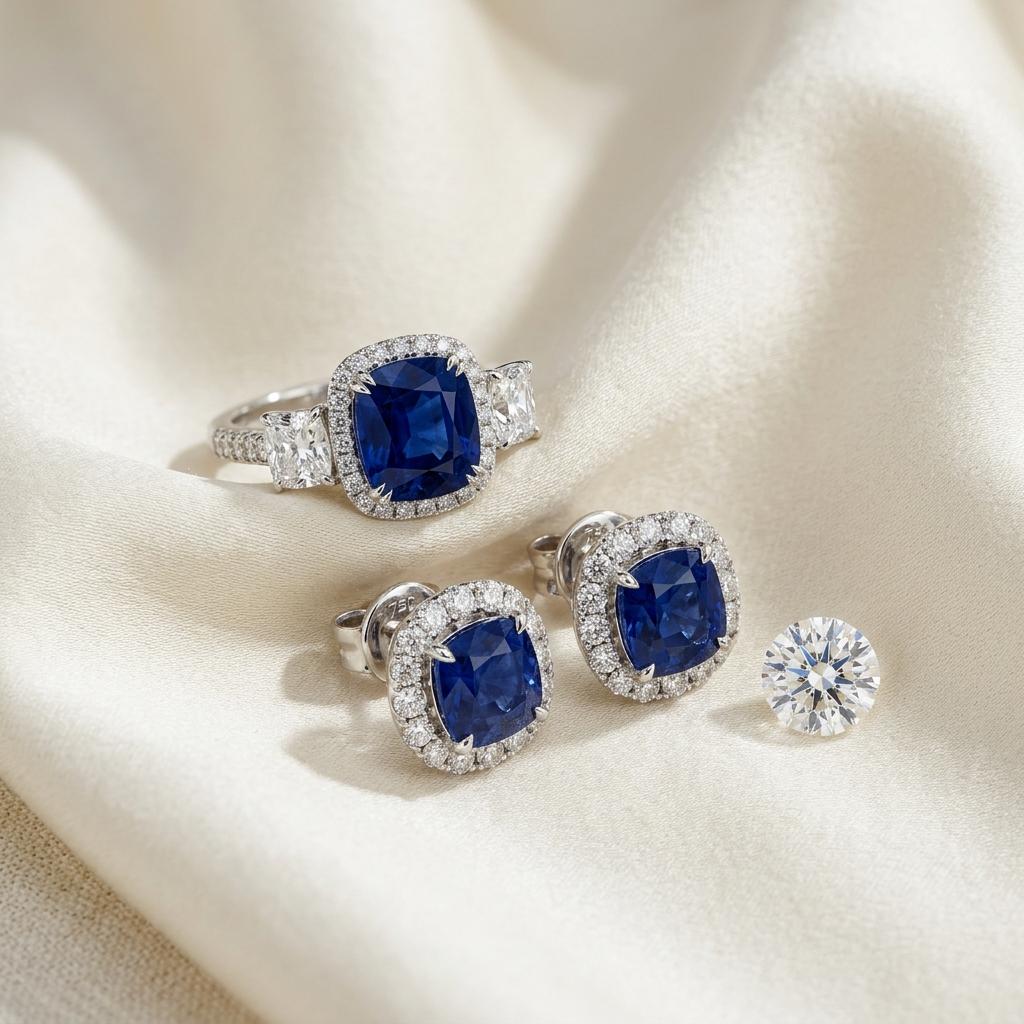
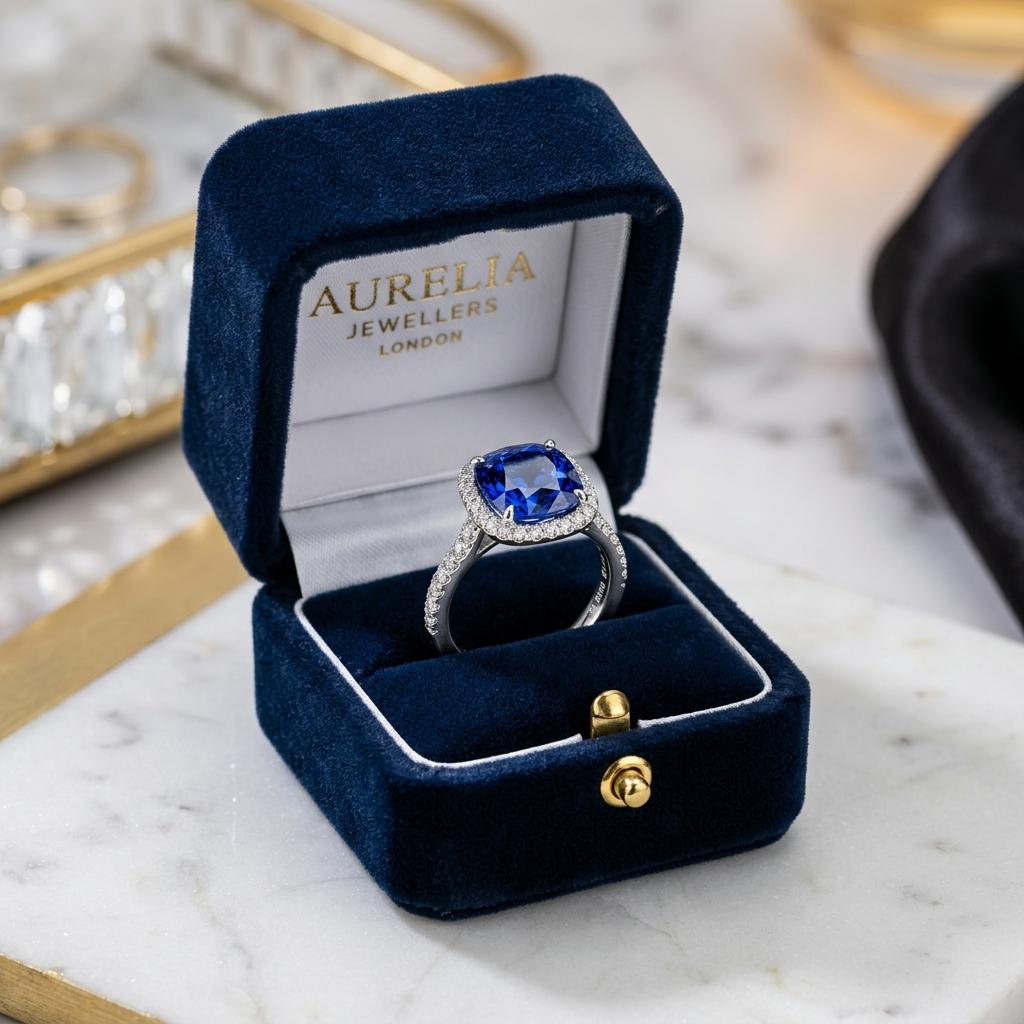
The classic pairing is a diamond halo, which frames the blue and lends the finger presence — the style made famous by royal engagement rings. Three-stone settings flank the sapphire with diamonds for a more architectural look, while a clean solitaire in platinum or white gold lets an exceptional stone speak alone. Yellow and rose gold have returned strongly among our Singapore clients, warming the blue beautifully.
Commissioning Bespoke from Singapore
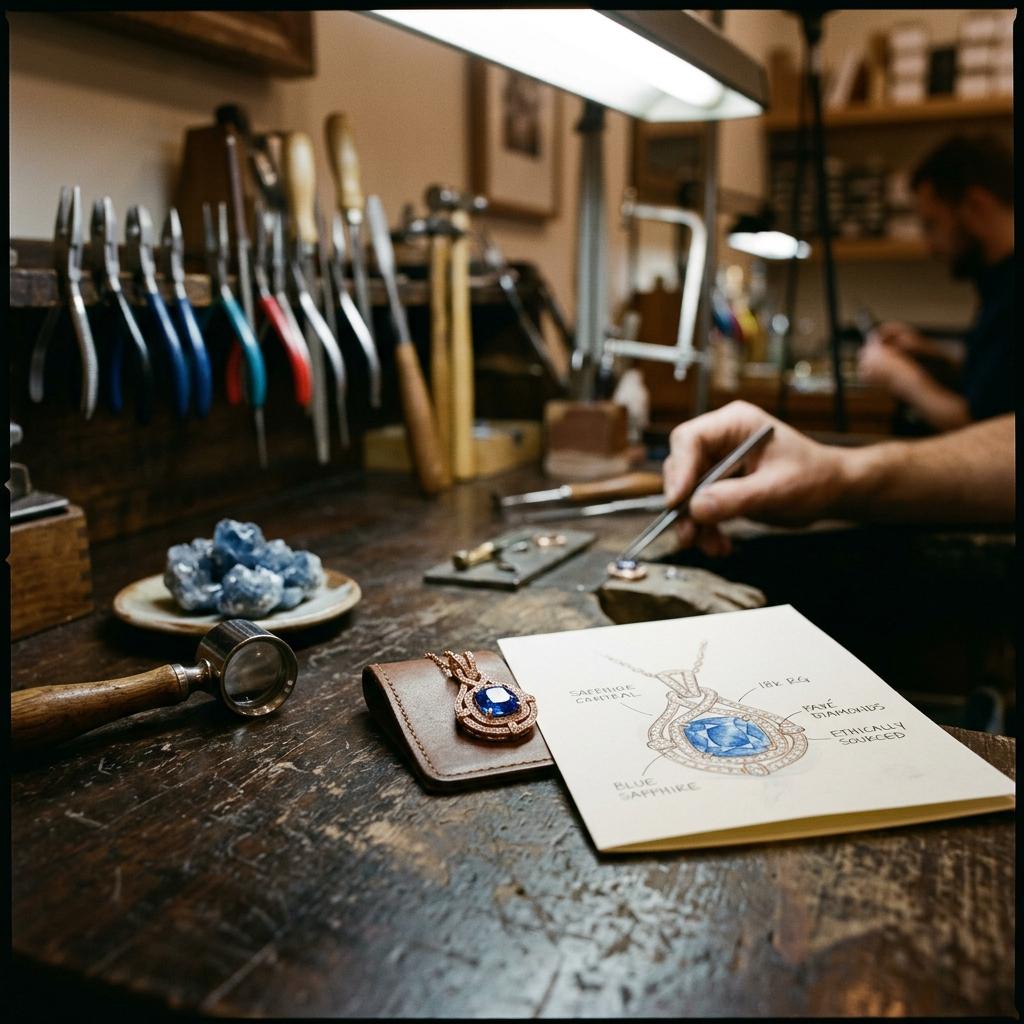
A bespoke commission is often no more expensive than a comparable boutique piece — you are simply paying for the stone and the craft rather than the retail premium. Our digital atelier lets you compose the ring online: choose the setting, metal, gemstone, cut and carat, and receive an indicative quotation instantly, so you can find the perfect balance between design and budget before speaking to a gemologist.
From confirmation, allow four to six weeks for cutting, setting and finishing, followed by fully insured courier delivery to Singapore with all certification papers.
A Ceylon sapphire engagement ring is a statement of individuality backed by two millennia of provenance. Choose colour first, insist on certification, and work with a house that controls the stone's journey from mine to setting — and the ring will outlive the moment it marks.