Sri Lankan Sapphire Rings
in Singapore
Two thousand years of gem heritage, some of the world's most ethical mining, and a direct route from the island's gravels to your hand in Singapore.
Every sapphire has a birthplace, and no birthplace carries more history than Sri Lanka. Traders have carried the island's blue stones west since Roman antiquity; Marco Polo wrote of them; crowns across Europe and Asia are set with them. When you wear a Sri Lankan sapphire ring, you wear the oldest continuously worked gem heritage on earth.
This page is about that provenance — where the stones come from, why the island's mining is among the most ethical in the gem world, and why buying origin-direct in Singapore changes both the price and the story of your ring.
Ceylon and Sri Lanka: one island, two names
'Ceylon' is the island's colonial-era name, retired officially in 1972 when it became Sri Lanka — yet the gem trade never let it go. 'Ceylon sapphire' remains the international term of art for a Sri Lankan stone, carrying centuries of accumulated reputation the way 'Champagne' does for wine.
In practice the terms are interchangeable: every Ceylon sapphire is Sri Lankan, and laboratory reports will state 'Sri Lanka (Ceylon)' as the origin opinion. We use both across this site, and our Ceylon sapphire ring guide surveys the styles those stones become.
Ratnapura and the island of gems
Sri Lanka's gem wealth concentrates around Ratnapura — literally 'City of Gems' in Sinhala — where rivers have been eroding gem-bearing rock for millions of years and concentrating sapphires into gravel beds called illam. The island has worked these gravels for over two millennia and they are still producing: alongside blue sapphire come pinks, yellows, the rare padparadscha, star sapphires and cat's-eye chrysoberyl.
That geological generosity is why so many of history's celebrated blues — including stones in the British Crown Jewels and the engagement ring worn by two Princesses of Wales — trace to this one island.
Artisanal mining: the ethical advantage
Sri Lankan sapphire mining looks nothing like industrial extraction. The typical operation is a hand-dug pit worked by a small licensed crew with rope, timber shoring and pans — a method essentially unchanged for centuries. Heavy machinery is heavily restricted, pits are modest and back-filled, and mined land routinely returns to paddy and garden.
The human economics matter too: traditional profit-sharing distributes proceeds among the crew rather than wage-labour alone, and the country bans the export of rough stones in many categories precisely so that cutting — where much of a gem's value is added — stays with Sri Lankan hands. For buyers who care where beautiful things come from, it is as close to a clear conscience as mining gets.
Origin-direct: what it changes for you
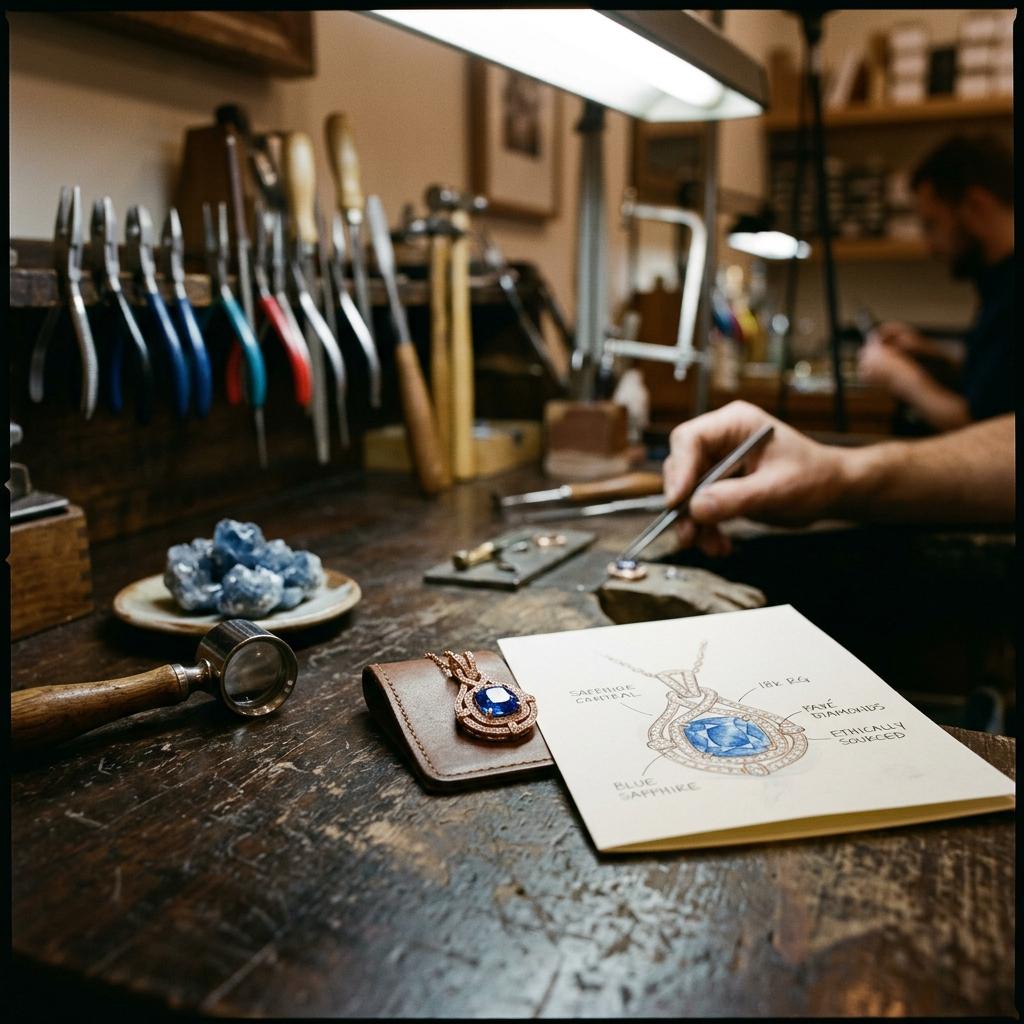
Most sapphires reach Southeast Asian showcases through a chain — miner, local dealer, foreign wholesaler, exporter, importer, retailer — and every link adds margin without adding beauty. Ceylon Gem Maison's difference is structural: years of professional experience exporting Sri Lankan gems means we select stones at origin and bring them directly to Singapore.
Two consequences. Price: removing intermediary margins means the same certified stone typically costs meaningfully less. Traceability: we can tell you where your sapphire was unearthed and follow its journey from gravel to finished ring — a story most retailers simply cannot access. That chain of custody pairs naturally with independent certification, covered in our natural sapphire guide.
Sri Lanka against the world's sapphire origins
| Origin | Known for | Availability today | Value position |
|---|---|---|---|
| Sri Lanka (Ceylon) | Luminous cornflower & royal blues, high clarity, full colour range | Actively producing | The connoisseur's value: top quality, sane prices |
| Kashmir | Velvety 'sleepy' blue of legend | Essentially exhausted; auction rarities | Extreme collector prices |
| Burma (Myanmar) | Deep royal blue | Limited; sourcing concerns persist | Very high |
| Madagascar | Wide range, some Ceylon-like material | Abundant since the 1990s | Accessible; shorter heritage |
Kashmir and Burmese stones are auction-house territory; Madagascar supplies excellent commercial material without the pedigree. Sri Lanka occupies the enviable middle: living heritage, active ethical production, and top-tier colour still attainable by real-world budgets — which is why it anchors everything we make.
From the island to your hand in Singapore
The journey of one of our rings: a stone selected at origin in Sri Lanka; precision cutting and polishing by hand; independent gemmological certification; then design and setting for a Singapore client — either through a private consultation or our online atelier — and finally insured delivery to your door.
Four hours of flight separate Colombo and Changi, and that proximity is Singapore's quiet advantage as a sapphire-buying city: few places on earth sit closer to the source of the world's finest blues.
Frequently asked questions
Is a Sri Lankan sapphire the same as a Ceylon sapphire?
Yes — identical. Ceylon is simply the island's former name, kept alive by the gem trade because of its centuries-old reputation. Laboratory reports typically write the origin as 'Sri Lanka (Ceylon)'.
Why are Sri Lankan sapphires so highly regarded?
A rare combination: exceptional material (luminous, transparent blues with lively colour in any light), unmatched heritage (two thousand years of continuous production), and active supply — unlike Kashmir, whose fabled mines are exhausted. The world's most famous engagement sapphire is widely reported to be Sri Lankan.
Are Sri Lankan sapphires ethically mined?
Sri Lanka is widely considered the gem world's ethical benchmark: small licensed artisanal pits, restricted machinery, land restoration, and traditional profit-sharing among crews. No system is perfect, which is why we select at origin ourselves and can speak to the journey of the stones we sell.
How is a sapphire's origin actually verified?
Gemmological laboratories determine origin from a stone's internal characteristics — inclusion patterns, growth structures and trace-element chemistry act as a geological fingerprint. Fine stones should carry a report stating both origin opinion and treatment status.
Do Sri Lankan sapphires cost more than other origins?
They carry a heritage premium over Madagascar material but remain far more attainable than Kashmir or Burmese stones of comparable quality. Buying origin-direct in Singapore — without intermediary margins — narrows the gap further, which is the structural advantage of how we source.
Can I trace the specific stone in my ring?
With us, yes: because we select at origin, we can share the provenance journey of your sapphire — something conventional retail supply chains generally cannot offer. Ask during your consultation and we will walk you through your stone's story.
Continue reading
For The Proposal
Ceylon Sapphire Engagement Rings in Singapore
The complete Ceylon sapphire engagement ring buying guide.
Certification
Natural Blue Sapphire Rings in Singapore
How laboratories verify origin, treatment and authenticity.
The Ring Styles
Ceylon Sapphire Rings in Singapore
Every ring a Sri Lankan sapphire can become.
Own a piece of the island's story
Every Ceylon Gem Maison ring begins in Sri Lanka's gem gravels and ends on a Singapore hand — with the journey documented in between. Start yours.